Wash day. For many of us with textured hair, these two words can trigger anything from mild anxiety to full-on dread. A process that takes others 15 minutes can become a 4-hour ordeal involving multiple products, octopus arms, and sometimes tears.
But here's the truth I've learned after 15 years of working exclusively with curly, wavy, and coily hair: wash day doesn't have to be complicated. In fact, the most effective routines are often the simplest. Today, I'm sharing the exact routine we teach at Kofa—streamlined, effective, and adaptable to every curl pattern.
Understanding Your Hair Before You Start
Before diving into products and techniques, you need to understand two things about your hair:
- Porosity — How easily your hair absorbs and retains moisture. Low porosity hair repels water; high porosity hair absorbs it quickly but loses it just as fast.
- Density — How many strands you have on your head (thin, medium, or thick), not to be confused with the thickness of individual strands.
Take a clean strand of hair and drop it in a glass of room-temperature water. If it floats for several minutes, you have low porosity. If it sinks quickly, you have high porosity. If it floats then slowly sinks, you have normal porosity.
The 5-Step Wash Day Routine
Step 1: Pre-Wash Treatment (Optional but Recommended)
If your hair is particularly dry, damaged, or you're dealing with product buildup, a pre-wash (or "pre-poo") treatment can be transformative. This step adds a protective layer before cleansing.
What to use:
- Coconut oil (excellent for low porosity hair as it penetrates the shaft)
- Olive oil or avocado oil (better for high porosity hair)
- A deep conditioner applied to dry hair
How long: 20 minutes minimum, or overnight under a satin bonnet for maximum benefit.
Step 2: Gentle Cleansing
This is where most textured hair people go wrong. We've been told our hair is "dirty" or that we need to scrub vigorously. The opposite is true.
Cleansing rules for textured hair:
- Focus shampoo on your scalp, not your lengths
- Use your fingertips (not nails) to massage the scalp in circular motions
- Let the suds run down your lengths—that's enough to cleanse them
- Avoid sulfates if possible; opt for gentle cleansers or co-washing
Frequency: Every 5-10 days for most textured hair types. Washing more frequently can strip natural oils and cause dryness.
Step 3: Deep Conditioning
This is the most important step. I cannot stress this enough. If you skip steps, never skip conditioning.
The technique matters:
- After rinsing shampoo, gently squeeze excess water from your hair
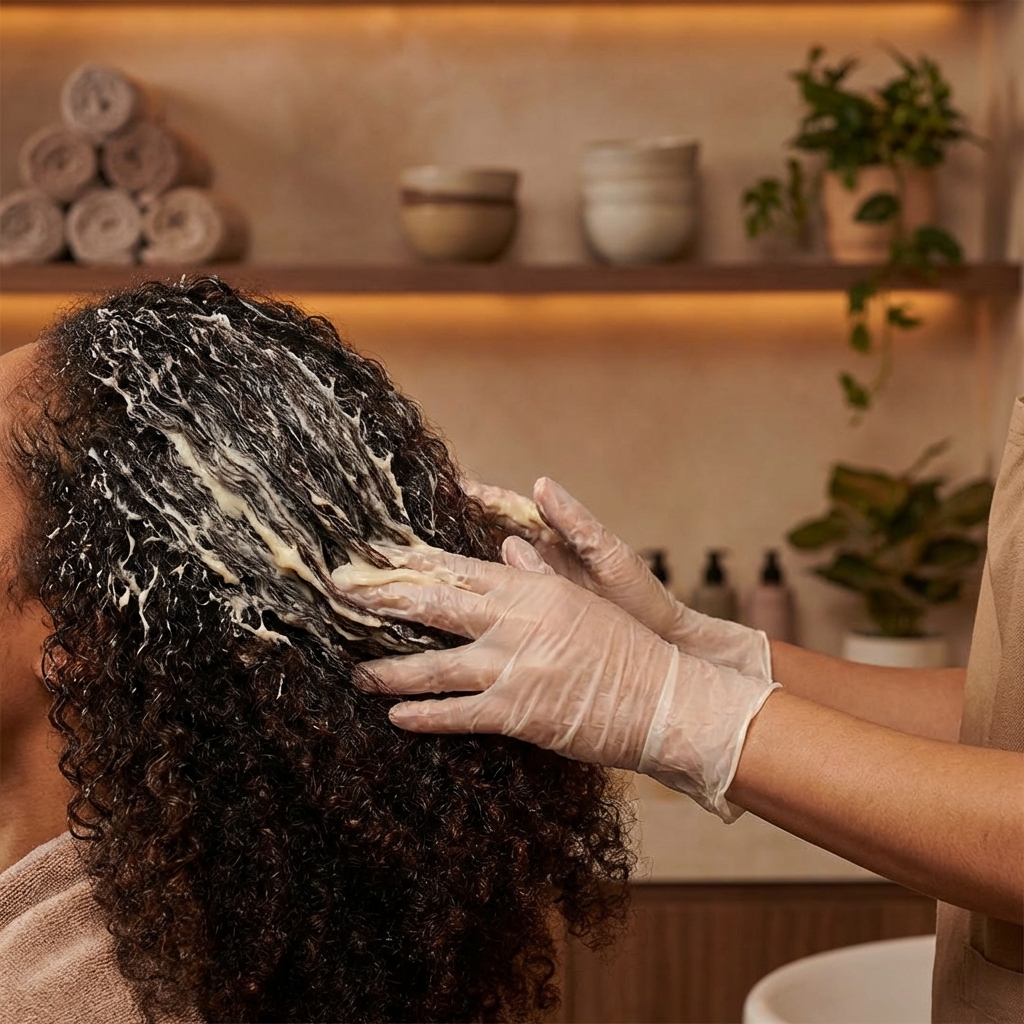
- Apply conditioner generously, focusing on mid-lengths and ends
- Use a wide-tooth comb or your fingers to detangle, starting from the ends and working up
- Let conditioner sit for 5-10 minutes (use a plastic cap to trap heat for deeper penetration)
- Rinse with cool water to seal the cuticle
"Your detangling should happen during conditioning, when your hair is slippery and protected. Never detangle dry hair."
Step 4: Leave-In Conditioner & Moisturiser
With your hair still wet (not dripping, but definitely not dry), apply your leave-in conditioner. This locks in moisture and prepares your hair for styling.
Application method:
- Apply to palms and smooth over sections of hair
- Scrunch upward to encourage curl formation
- For coily hair (4A-4C), consider the LOC or LCO method (Liquid, Oil, Cream in varying orders)
Step 5: Styling & Drying
How you dry your hair determines how your curls will look for the next week. This is not the time to rush.
Golden rules:
- Never rub with a regular terry cloth towel—it causes frizz and breakage
- Use a microfiber towel or an old t-shirt to scrunch out excess water
- Apply styling products (gel, mousse, or cream) to soaking wet hair for best definition
- Air dry when possible, or use a diffuser on low heat with the "hover" technique
Do your wash day in the evening and let your hair air dry overnight. Sleep on a satin pillowcase or with a satin bonnet. Your curls will be dry and defined by morning.
Common Mistakes to Avoid
- Using too many products — More is not better. Product buildup weighs curls down.
- Touching your hair while drying — This disrupts curl formation and causes frizz.
- Washing too frequently — This strips natural oils. Extend time between washes gradually.
- Applying products to dry sections — Always apply products to wet hair for even distribution.
- Skipping trims — Dead ends travel up. Regular trims (every 8-12 weeks) keep curls healthy.
Your Next Steps
This routine is a starting point—not a prescription. Everyone's hair is different, and what works for someone else may not work for you. The key is experimentation and patience.
If you're struggling to find the right products or techniques for your specific hair type, our consultation service exists for exactly this purpose. In 45 minutes, one of our curl specialists will analyse your hair, identify its unique needs, and create a personalised routine just for you.